Why Masonry Sand Is Better Than River Sand for Leveling a Bermuda Lawn
Learn why using masonry sand instead of river sand for leveling a Bermuda lawn results in a cleaner, more consistent, and smoother yard surface.
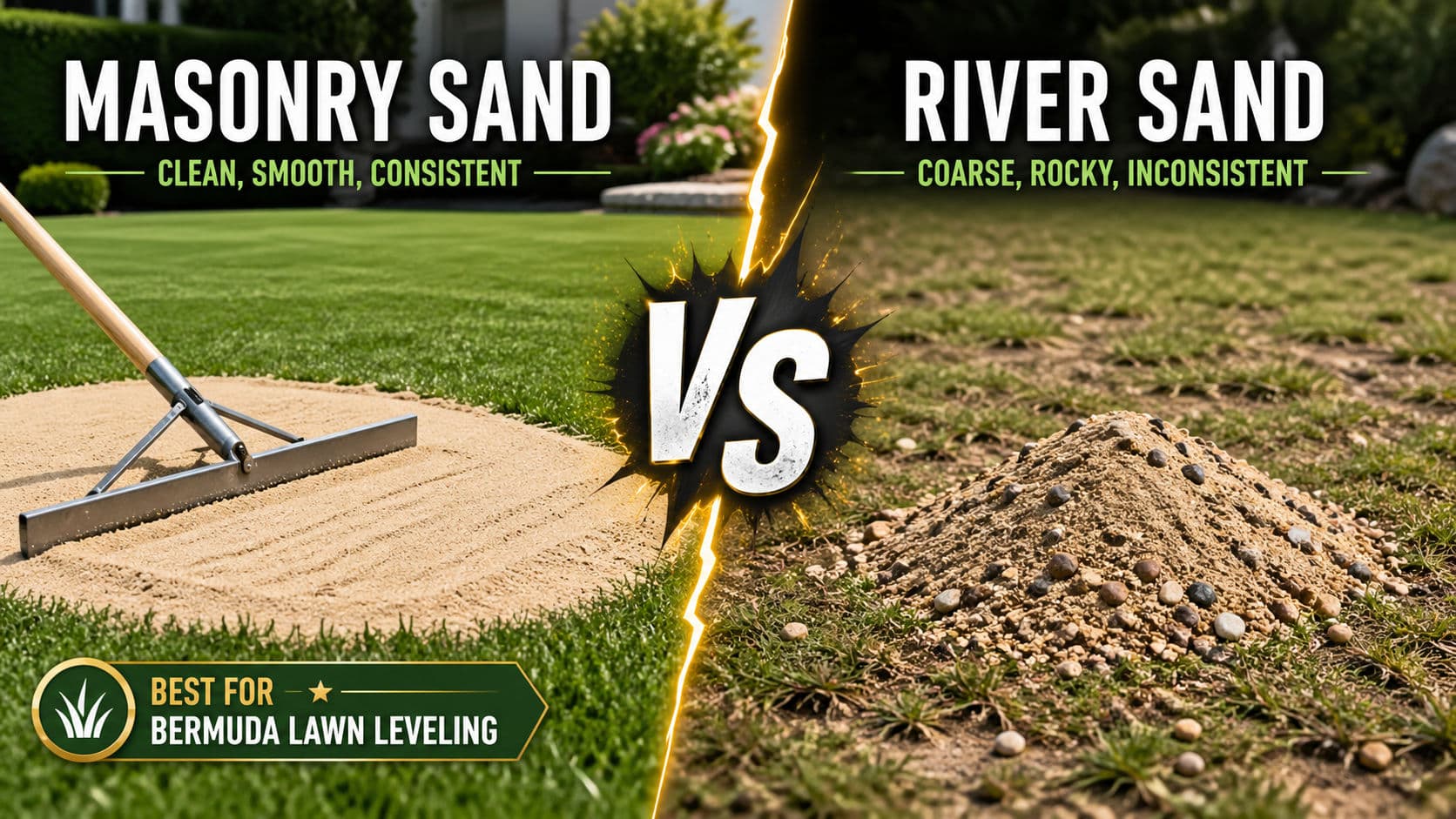
Leveling a Bermuda lawn is one of the best ways to improve the look, feel, and performance of your yard. If your lawn has bumps, dips, uneven mower lines, or low spots that hold water, applying the right leveling material can make a big difference.
For Bermuda grass, masonry sand is often preferred over river sand because it is typically cleaner, more consistent, easier to spread, and better suited for creating a smooth lawn surface. Bermuda is a strong, aggressive warm-season grass that can grow through light layers of sand when the lawn is healthy and actively growing. That makes it one of the best grasses for lawn leveling projects.
However, the material you choose matters. Using the wrong sand can leave your lawn uneven, introduce unwanted debris, create drainage issues, or make mowing more difficult. That is why many homeowners and lawn care professionals choose masonry sand instead of river sand for leveling Bermuda lawns.
What Is Lawn Leveling?
Lawn leveling is the process of spreading a thin layer of material over an existing lawn to fill low spots, smooth uneven areas, and create a more uniform surface. For Bermuda lawns, sand is commonly used because it works down into the turf canopy, fills small dips, and does not break down quickly like organic materials.
The goal is not to bury the lawn. The goal is to smooth the surface while allowing the Bermuda grass to continue growing through the material.
When done correctly, lawn leveling can improve curb appeal, mowing quality, drainage consistency, and overall lawn appearance.
Why Bermuda Grass Responds Well to Sand Leveling
Bermuda grass is one of the best turf types for sand leveling because it spreads aggressively through above-ground runners and underground growth. During the active growing season, healthy Bermuda can recover quickly from light topdressing and fill back in across the surface.
This makes Bermuda ideal for homeowners who want a smoother, tighter, more golf-course-style lawn. When the lawn is actively growing, sand can be worked into low areas while the grass continues to push upward and spread.
The key is proper timing. Bermuda lawns should usually be leveled during warm weather when the grass is actively growing, not when it is dormant or stressed.
What Is Masonry Sand?
Masonry sand is a clean, screened sand commonly used in construction, hardscaping, and lawn leveling projects. It is usually processed to remove larger rocks, debris, and inconsistent particles.
For lawn leveling, the biggest benefit of masonry sand is consistency. Because it is screened, it is typically easier to spread, drag, rake, and work into the lawn. This helps create a smoother finish across the yard.
It is important to use clean masonry sand, not mortar mix, concrete sand with large gravel, or any material that contains cement, lime, or additives.
What Is River Sand?
River sand is naturally collected from riverbeds or similar deposits. Depending on the source, it can vary widely in texture, size, cleanliness, and composition.
Some river sand may be usable for certain landscape or construction purposes, but it is often less predictable for lawn leveling. It may contain larger particles, small stones, organic matter, silt, clay, or other unwanted material.
That inconsistency is one of the main reasons river sand is not usually the first choice for leveling a Bermuda lawn.
Masonry Sand Spreads More Evenly
One of the biggest reasons to use masonry sand for Bermuda lawn leveling is how easily it spreads. A smooth, consistent sand is much easier to rake, broom, drag, and level across the turf.
When sand spreads evenly, it is easier to fill low spots without creating new humps. This matters because the goal of lawn leveling is precision. Uneven material can make the lawn worse instead of better.
River sand can be harder to work with if it contains inconsistent particle sizes, small rocks, or clumps. Those irregularities can make it difficult to create a smooth, finished surface.
Masonry Sand Creates a Smoother Mowing Surface
A level Bermuda lawn does more than look better. It also mows better.
Bermuda grass is often maintained at lower mowing heights than many other warm-season grasses. When the lawn is bumpy, mower blades can scalp high spots and leave uneven cuts. Over time, this can create brown patches, stress the turf, and make the yard look rough even after mowing.
Masonry sand helps smooth out small dips and uneven areas so the mower can glide more consistently across the lawn. This can reduce scalping, improve cut quality, and help the lawn look cleaner after every mow.
Masonry Sand Is Usually Cleaner Than River Sand
Clean material is important when leveling a lawn. You do not want to spread rocks, clay, weeds, sticks, or unknown debris across your Bermuda grass.
Masonry sand is typically screened and processed, which helps reduce unwanted material. This makes it a better option when you want a clean, predictable leveling material.
River sand can vary depending on where it came from. Some loads may contain small gravel, silt, clay, or organic matter. These materials can create clumping, drainage problems, or rough areas in the lawn.
For a cleaner finish, masonry sand is usually the better choice.
Masonry Sand Is Easier to Work Into Bermuda Grass
When leveling a Bermuda lawn, the sand needs to move down through the grass canopy and settle into the low spots. Masonry sand is often easier to work into the turf because of its finer, more consistent texture.
This helps the Bermuda grass blades remain exposed instead of being completely buried. Keeping some green grass visible is important because the lawn still needs sunlight to recover.
River sand may be more difficult to work in evenly if it contains larger particles or uneven material. That can leave piles sitting on top of the grass, which may slow recovery or smother weak areas.
River Sand Can Contain Rocks and Larger Particles
One of the biggest problems with river sand is inconsistency. A load of river sand may contain pebbles, coarse grains, or small rocks that do not belong in a finished lawn surface.
This can create several problems:
Small rocks can damage mower blades, create rough walking areas, interfere with a smooth cut, and make the lawn look unfinished.
For a Bermuda lawn that is being leveled for a clean, low-cut appearance, those larger particles can be a major issue.
Masonry sand is usually a better option because it is more refined and easier to finish smoothly.
River Sand May Not Provide a Consistent Grade
Leveling a lawn depends on consistency. If the material changes from one section to another, the finished surface may not settle evenly.
River sand can vary in particle size and texture, which may cause some areas to compact differently than others. This can lead to uneven settling over time.
Masonry sand usually provides a more predictable result. Because it is screened, it is easier to apply at a consistent depth and create a smoother final grade.
Masonry Sand Helps Improve Lawn Appearance Faster
When homeowners level a Bermuda lawn, they usually want the lawn to look smoother as quickly as possible. Masonry sand can help achieve that because it is easier to spread thinly and evenly.
Once watered in and worked through the turf, masonry sand settles into the low areas and allows the Bermuda to grow back through. With proper timing, watering, and mowing, the lawn can recover and begin looking cleaner and more uniform.
River sand may take more effort to spread, rake, and correct if the texture is inconsistent.
Masonry Sand Is Better for Precision Leveling
If your goal is a high-quality Bermuda lawn, precision matters. Masonry sand allows for more controlled leveling, especially when using a lawn leveling rake, drag mat, push broom, or leveling lute.
It is easier to feather into low areas, smooth across transitions, and avoid leaving ridges behind. This makes masonry sand a better fit for homeowners who want a more polished lawn surface.
River sand may work for rough fill in some situations, but it is usually not ideal for finish-leveling a Bermuda lawn.
When Should You Level a Bermuda Lawn With Masonry Sand?
The best time to level a Bermuda lawn is when the grass is actively growing and healthy. In many warm-season areas, this is late spring through summer.
Avoid leveling when Bermuda is dormant, weak, drought-stressed, recently treated with harsh products, or struggling from disease or pests. The grass needs energy to grow through the sand and recover.
A good rule is to level when the lawn is green, growing, and being mowed regularly.
How Much Masonry Sand Should You Use?
For minor leveling, a light layer is usually best. In many cases, you want the tips of the Bermuda grass still visible after spreading the sand.
Applying too much at once can smother the lawn. Deep holes or major low spots may need multiple leveling applications over time instead of one heavy layer.
For small dips, masonry sand can be spread, dragged, watered in, and allowed to settle. For deeper uneven areas, it is better to build the grade gradually.
Should You Aerate Before Sand Leveling?
Aerating before leveling can be helpful, especially if the lawn has compacted soil. Core aeration opens the soil and can help water, oxygen, and nutrients move deeper into the root zone.
For Bermuda lawns, aeration and light sand leveling are often paired during the active growing season. This can improve soil movement, help reduce compaction, and support stronger recovery.
However, not every lawn needs aeration before leveling. If the soil is already loose and healthy, leveling may be enough.
Important Mistakes to Avoid
The biggest mistake homeowners make is applying too much sand at one time. Bermuda is tough, but it still needs sunlight. If the grass is buried too deeply, recovery can slow down or fail.
Another mistake is using dirty or inconsistent material. Avoid sand that contains rocks, clay, weeds, construction debris, or unknown additives.
You should also avoid using mortar mix, concrete mix, or any sand product that contains cement. Only use clean sand suitable for lawn leveling.
Final Thoughts: Choose Masonry Sand for a Smoother Bermuda Lawn
Masonry sand is often the better choice for leveling a Bermuda lawn because it is cleaner, more consistent, easier to spread, and better suited for creating a smooth mowing surface.
River sand may seem like a simple option, but it can be unpredictable. It may contain rocks, silt, clay, debris, or uneven particle sizes that make leveling harder and reduce the quality of the finished lawn.
For homeowners who want a smoother, cleaner, better-looking Bermuda lawn, masonry sand is usually the smarter choice. When applied at the right time and in the right amount, it can help create a more even surface, improve mowing results, reduce scalping, and give your Bermuda lawn a more professional appearance.
Frequently Asked Questions About Leveling Bermuda With Masonry Sand
Is masonry sand good for leveling Bermuda grass?
Yes. Clean masonry sand is commonly used for leveling Bermuda lawns because it spreads smoothly, works into the turf well, and helps fill low spots without breaking down quickly.
Why not use river sand on a Bermuda lawn?
River sand can be inconsistent. It may contain rocks, silt, clay, organic matter, or debris that can make the lawn harder to level and create a rougher finish.
Can masonry sand hurt Bermuda grass?
Masonry sand can hurt Bermuda if too much is applied at one time and the grass is completely buried. For best results, apply a thin layer while the Bermuda is actively growing.
When is the best time to level Bermuda grass?
The best time to level Bermuda grass is during active growth, usually late spring through summer. Avoid leveling when the grass is dormant or stressed.
Should I water after applying masonry sand?
Yes. Watering after leveling helps the sand settle into low areas and move down into the turf canopy. It also helps the Bermuda recover.
Can I level deep low spots with masonry sand?
Deep low spots should usually be corrected gradually. Applying too much sand at once can smother the grass. Multiple light applications are often better than one heavy application.
Is masonry sand the same as mortar mix?
No. Masonry sand is sand. Mortar mix contains binding materials and should not be used for leveling a lawn.